7 Common Mistakes Christians Make When Reading the Old Testament
Open a Bible to Leviticus and most readers last about ninety seconds. The nine chapters of genealogy at the start of Chronicles get skipped entirely. Laws about mildew, mold, and blended fabrics feel like they belong to another world — which, of course, they do.
Then there are the stories we think we know. David and Goliath. Daniel in the lions' den. Jonah and the fish. We've heard them so many times since childhood that we stop noticing what the text actually says. Meanwhile the Old Testament makes up roughly three-quarters of the Bible, and it was the only Scripture Jesus and his apostles had.
Reading it well doesn't require a seminary degree. It requires a few habits — and unlearning a few very common ones.
1. Turning Every Story Into a Moral Lesson
David and Goliath becomes a sermon about facing your giants. Gideon's fleece becomes a model for discerning God's will. Nehemiah's rebuilding project becomes a template for leadership. These readings aren't entirely wrong, but they miss the main point: God is the hero of these narratives, not the human characters.
Gideon lays out a fleece not out of admirable faith but out of stubborn doubt, and God accommodates him anyway. David's sling is not a technique for confidence; it demonstrates that God saves without a sword. When Joshua meets the commander of the Lord's army before Jericho, he asks whose side the commander is on — and the answer is essentially, "Neither. Take off your sandals."
A better first question is not "What should I do?" but "What is God doing here, and what did this mean to Israel?" Application comes after observation, not instead of it.
2. Treating Old Testament Law as a Universal Rulebook
Christians reach for Leviticus in two opposite ways: to enforce rules the New Testament never repeats, or to dismiss the whole book as irrelevant. Both skip the work of asking who is speaking, to whom, and under what covenant.
Some laws — love of neighbor, honesty in business, sexual ethics, care for the foreigner and the poor — reflect God's enduring character and are reaffirmed in the New Testament. Others functioned as covenant markers for Israel, and the New Testament treats them as fulfilled in Christ. That's the argument in Mark 7, in Acts 15, and throughout Hebrews.
A workable framework
The traditional division of the law into moral, civil, and ceremonial categories is a useful map, though faithful readers disagree about where some lines fall. Use it as a tool, not a test of orthodoxy. The law shows us God's holiness and our need for mercy; it was never given as a checklist for twenty-first-century households.
3. Reading Prophecy as a Headline Feed
Jeremiah 29:11 — "I know the plans I have for you" — was written to exiles facing seventy years of displacement. It promises a corporate return, not a personal career breakthrough. That doesn't make it less true. It makes it more interesting.
Most prophets spoke first to their own generation. Amos addressed a prosperous, complacent northern kingdom. Isaiah confronted Judah about Assyria. Revelation was written to seven real churches under real pressure. Fulfillment often arrives in layers, with a near horizon and a further one, which is why the New Testament can quote an Old Testament text and apply it in a way the original audience never anticipated.
Before applying a prophecy to today, identify three things: the date, the original audience, and the covenant language being used. Then ask how the New Testament handles it.
4. Ignoring Genre
We don't read a legal brief the way we read a poem, and the Bible expects the same courtesy.
- Poetry uses imagery and hyperbole. God does not have wings, and Psalm 137's cry for vengeance is a raw prayer, not a policy proposal.
- Proverbs states what is generally true, not what is guaranteed. Proverbs 22:6 is a pattern, not a promise about every child.
- Apocalyptic writing — portions of Daniel, Zechariah, Revelation — speaks in symbols, beasts, and numbers. Treating its images as literal photographs breaks the genre.
- Narrative reports what happened; it does not always endorse it. Judges ends by telling us everyone did what was right in their own eyes. That's a diagnosis, not a model.
5. Confusing Description With Prescription
Paul's letter to Philemon doesn't abolish slavery on the page, but it undermines the logic that would sustain it. The patriarchs practice polygamy, and the text shows the damage it produces. Rachel steals her father's household gods; nobody in the story suggests we should.
Ask what the narrative is doing with an act, not merely that it happened. Look for the author's evaluation — often a single phrase or a consequence that arrives three chapters later.
6. Pulling Verses Out of Their Passage
"I can do all things through Christ who strengthens me" appears in a paragraph about contentment in hunger and need, not about winning championships. "Where two or three are gathered" sits inside instructions about confronting sin in the church. "Judge not" follows a warning about hypocrisy, not a ban on discernment.
Read the paragraph, then the chapter, then ask where the book fits in the whole biblical story. A verse ripped from its setting will still sound spiritual. It just may not be saying what you think.
7. Treating the Old Testament as Obsolete — or as a Puzzle of Hidden Symbols
One reader sets the Old Testament aside as a rough draft. Another turns every detail into a coded reference to Jesus, so that the tabernacle curtains and the number of fighting men in a census all become allegories. Both approaches flatten the text.
Jesus did say the Scriptures testify of him, and on the road to Emmaus he interpreted Moses, the Psalms, and the Prophets. But he did it by tracing a story, not by decoding riddles. Typology — Adam, Moses, David, the Passover lamb, the temple — is real and restrained. The key is asking how a passage fits the arc that runs from creation through covenant, exile, and return, and finds its center in Christ.
Habits Worth Building
None of this requires special training. It requires patience.
- Read whole books, not scattered verses. Twenty minutes in one book beats a dozen random passages.
- Answer the basic questions first: who wrote this, to whom, when, and why?
- Use a study Bible's introduction before its footnotes. The overview does more work than any single note.
- Write down your questions and come back to them with two or three commentaries — at least one older than you are.
- Pray the Psalms. They teach the vocabulary of lament, gratitude, and trust better than any modern devotional.
- Read with your church. The historic creeds and the consensus of ordinary believers across centuries are a safeguard against clever readings that nobody has ever held.
You will not master the Old Testament. Nobody has. The goal is a slow, patient familiarity — the kind that comes from reading the same books again and again over years, noticing more each time, and letting the whole story teach you who God is.
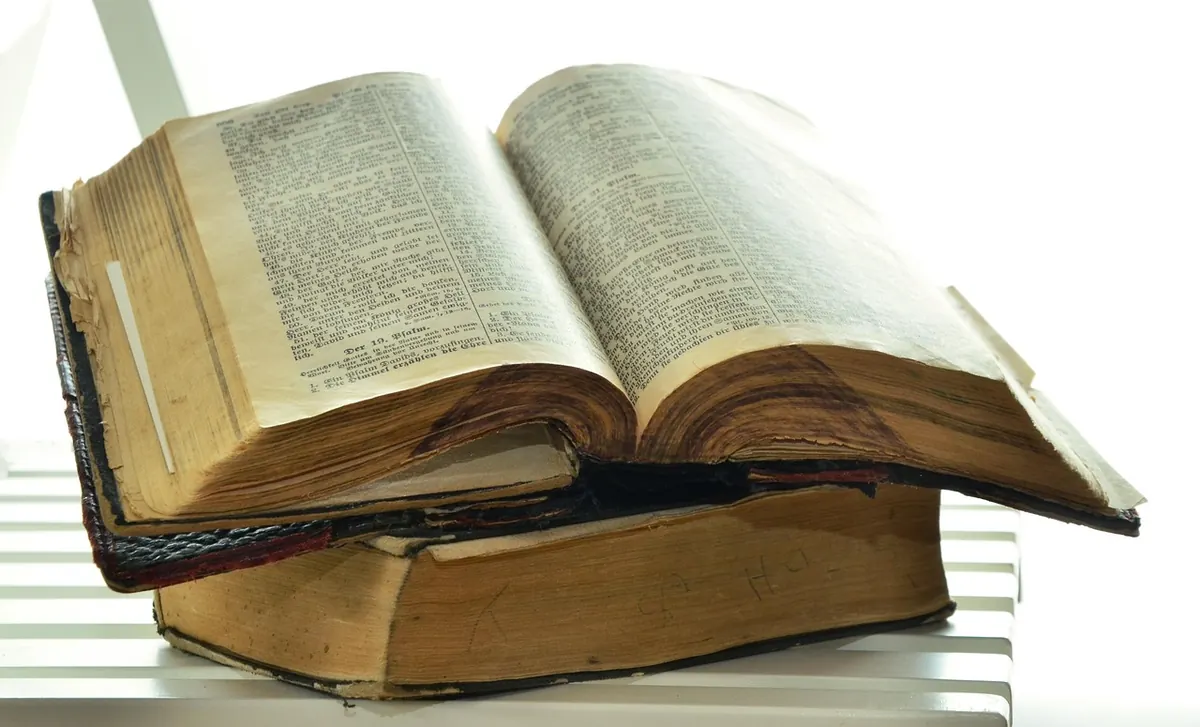
Photo: congerdesign / Pixabay
How to Fast Safely as a Christian: A Beginner's Guide to Biblical Fasting
Fasting is a normal part of Christian devotion, but it needs care. Here is how to choose a fast, prepare...

How to Talk About Faith at Work Without Being That Person
A practical guide to sharing faith at work with listening, good timing, legal awareness, and habits that...
About Us