Why So Many Churches Are Closing: A Data-Driven Explainer
Drive through a small Midwestern town or an older neighborhood in a Northeastern city and you will pass the same scene: a brick building with a tidy sign out front, a parking lot holding four cars, and a real estate listing quietly handled by an agent who specializes in religious property. Church closures are not a rumor or a talking point. Denominational annual reports, county property records, and Gallup's long-running tracking of religious membership all point in the same direction — fewer Americans belong to a congregation than at any point in the eight decades Gallup has asked the question.
But "churches are closing" is not one story. It is three overlapping stories — attendance, demographics, and money — and the congregations that survive are usually the ones that read those stories early and honestly instead of waiting for a crisis to force the conversation.
The gap between the roll and the room
A church's membership list is a historical document. The count in the chairs on Sunday morning is current data. Those two numbers have drifted apart for decades, and the pandemic widened the gap in a hurry. Plenty of congregations that averaged 150 people before 2020 settled at 90 or 100 afterward and never recovered the difference. Rolls stayed inflated because removing a name feels like giving up on someone.
That mismatch wrecks planning. Staffing, budgets, and building decisions get made for the roster instead of the room. A church with 300 names and 60 chairs is running a financial plan for a congregation that no longer exists.
Irregular attendance matters too. Someone who shows up twice a month is still committed, but they cannot be counted on to teach Sunday school every week or chair the trustee board. Volunteer pipelines thin out long before the offering plate does.
The demographic math is unforgiving
Churches close where people leave and open where people move. Rural counties and older urban neighborhoods have been losing population for decades while suburbs and Sun Belt metros have gained. A congregation anchored to a neighborhood that emptied out will struggle no matter how strong its preaching or how warm its potluck.
Age matters as much as population. Church consultants often use a simple ratio: compare funerals to baptisms or professions of faith over three years. If funerals outnumber baptisms by a wide margin and the median age of the congregation sits a decade above the median age of the surrounding community, the church is not one bad budget year from trouble. It is near the end of a natural life cycle.
There is also the disappearance of the habit attender. For generations, a share of any congregation showed up because it was expected — neighbors would notice, business relationships depended on it, Sunday was simply when the town gathered. That cultural tailwind is gone. The people who come now choose to be there, which is better for commitment and much harder for recruiting, because nothing fills a pew by default anymore.
The money squeeze
Fixed costs do not shrink when attendance does. A building still needs heat, insurance, and eventually a new roof. Deferred maintenance piles up like a second mortgage, and the bill always arrives at the worst possible moment.
Revenue, meanwhile, comes from a shrinking pool of giving households. Most congregations run on a pattern where a small fraction of givers supplies most of the budget. When three or four of those households move, die, or retire onto a fixed income, the budget breaks.
The spiral is predictable. Cut the youth director, and young families drift. Income drops, so the music budget goes. The older members who funded everything get discouraged and stop volunteering. Each cut is defensible on its own. Together they shrink the church.
Property adds a twist, because the building is often the largest asset and the heaviest liability at the same time. Selling is rarely simple — think denominational trust clauses, deed restrictions, zoning, and the grief of people who were married and buried there. Before anyone signs, talk to an attorney and to whoever handles property for your denomination or network.
Not every closure looks the same
- Merger. Two small congregations become one, keep one building, and combine both the people and the bills.
- Sale and relocation. A congregation sells a landmark property and moves into a school, storefront, or shared space it can actually afford.
- Ending to plant. A dying church closes deliberately and hands its building or proceeds to a new congregation or church plant.
- Planned celebration. The congregation sets a date, thanks God for the decades, archives the records, and finishes with a final service and a clear plan for members.
- Crisis closure. Foreclosure, a sudden pastoral departure, or a split forces a rushed ending. This is the one worth preventing.
What surviving congregations do differently
They right-size the building
Sell it, lease it, share it, or move to something smaller. A full small room beats a half-empty large one — visitors read the room within about ten seconds, and a sparse sanctuary tells them they arrived after the good years.
They share leadership and ministry
Bi-vocational pastors, a shared youth ministry across three churches, one combined vacation Bible school, a parish model where one pastor serves two or three congregations. Cooperation was once treated as a sign of weakness. In shrinking regions it is simple stewardship.
They measure honestly and act early
Attendance, giving households, first-time guests, baptisms, funerals, average age — reviewed twice a year, out loud, with the congregation. Churches rarely die suddenly. They decline quietly while everyone assumes somebody else is watching the numbers.
Warning signs worth taking seriously
- Most of the budget comes from fewer than twenty households.
- Funerals have outnumbered baptisms for three straight years.
- No one under forty holds a leadership role.
- Deferred maintenance exceeds a full year of giving.
- The same seven people chair every committee.
- The budget balances only by drawing down savings or an endowment.
If your congregation is in the red zone
Start with facts, not feelings. Pull three years of actual counted attendance, giving records, and the building's maintenance history. Take them to your board and to your regional or denominational office — most have walked this road with other churches and can say plainly what tends to work and what tends to delay the inevitable.
Then ask the honest question: is this congregation called to continue in this building, to continue in a different form, or to finish well? All three are legitimate answers. What rarely works is drifting for another five years while a handful of volunteers burn out holding the doors open.
Whatever you decide, care for the people first. Name the grief, plan a clear ending or transition, help members find a next congregation, and say thank you out loud. And before money or property changes hands, get legal and financial advice
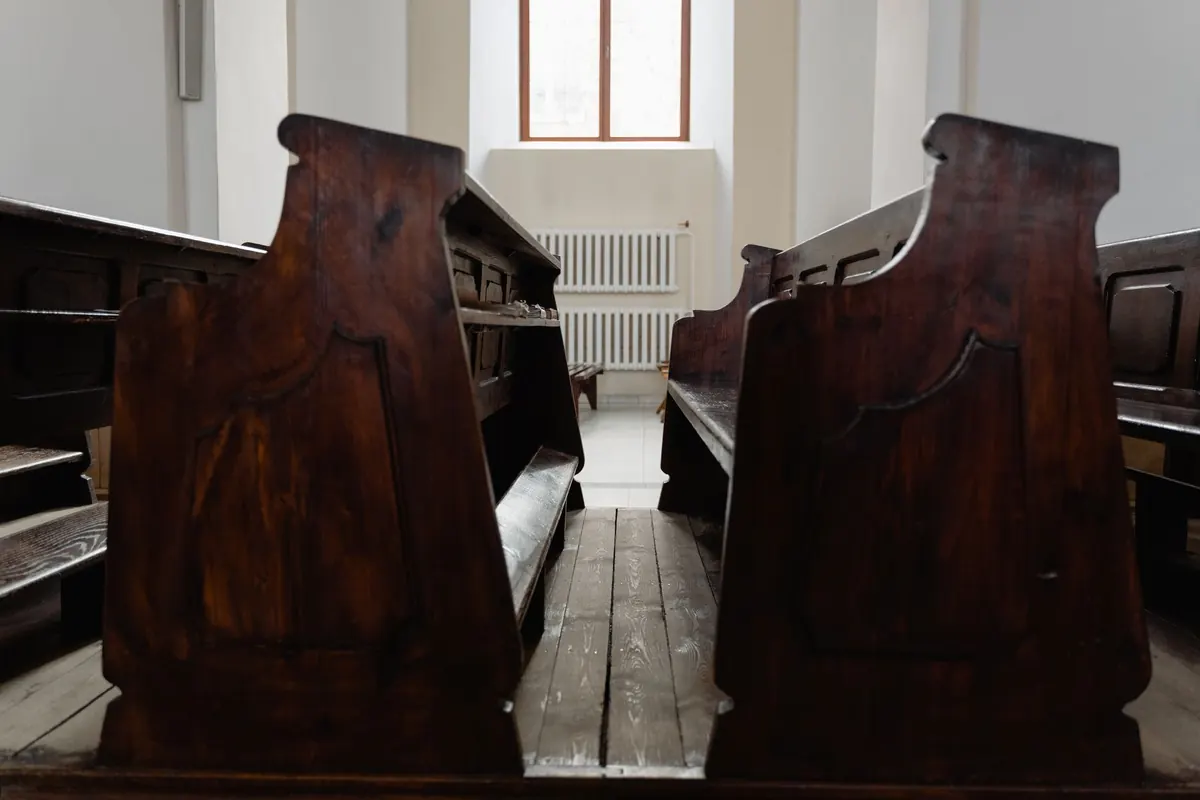
Photo: MART PRODUCTION / Pexels

How to Fast Safely as a Christian: A Beginner's Guide to Biblical Fasting
Fasting is a normal part of Christian devotion, but it needs care. Here is how to choose a fast, prepare...

How to Talk About Faith at Work Without Being That Person
A practical guide to sharing faith at work with listening, good timing, legal awareness, and habits that...
About Us